
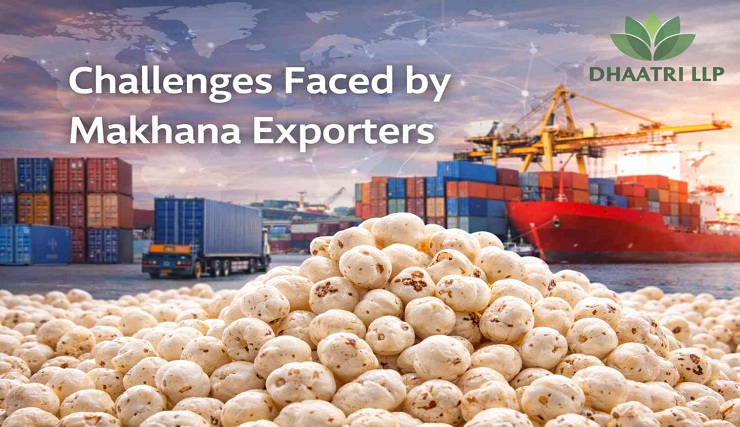
The international demand for makhana, additionally referred to as fox nuts or lotus seeds, has grown considerably due to the growing attention on wholesome snacking and plant-based nutrients. India, being the world’s largest makhana manufacturer, holds strong export ability. However, exporting makhana isn’t always without demanding situations. From first-rate control and compliance to logistics and price volatility, exporters face multiple operational and strategic hurdles. Dhaatri LLP, with its revel in in agricultural exports, is aware these challenges deeply and adopts dependent solutions to conquer them at the same time as preserving global necessities.
Understanding the Global Makhana Export Market
The international makhana market is pushed through health-conscious clients, organic food stores, and the growing popularity of Ayurveda-based diets. Countries in North America, Europe, the Middle East, and Southeast Asia are an increasing number of uploading makhana for retail and meals processing functions. Despite robust calls for, exporters have to navigate strict import rules, competitive pricing, and consistency expectations from distant purchasers.
Quality Consistency as a Core Export Challenge
Maintaining normal brilliance remains one of the most extensive annoying conditions for makhana exporters. Variations in seed length, puffing, texture, and flavor regularly arise because of conventional farming strategies, climatic elements, and post-harvest handling. International customers assume uniformity during shipments, making high-quality inconsistency a number one danger to long-term contracts.
Overcoming Quality Variations in Makhana
Dhaatri LLP addresses pleasant consistency through controlled sourcing, batch-level inspection, and standardized processing strategies. By working closely with skilled farmers and using cutting-edge grading and sorting gadgets, exporters can make certain uniform seed size, better puffing fees, and regular taste profiles appropriate for export markets.
Post-Harvest Handling and Storage Issues
Makhana is touchy to moisture, temperature, and dealing with practices. Improper drying, storage, or packaging can cause fungal growth, discoloration, and reduced shelf life. Many exporters face rejection or fee reductions because of poor post-harvest control.
Improving Storage and Shelf Stability
Advanced drying techniques, humidity-managed garage centers, and meals-grade packaging materials extensively beautify shelf lives. Dhaatri LLP focuses on hygienic warehousing, vacuum-sealed packaging, and moisture-barrier solutions to defend product high-quality all through lengthy-distance transportation.
Compliance with International Food Safety Standards
Exporting makhana calls for compliance with various international food safety and regulatory requirements, which include FSSAI, HACCP, ISO, FDA, and EU guidelines. Documentation errors, incomplete certifications, or inconsistent trying out reviews can delay shipments or result in consequences.
1) Ensuring Regulatory Compliance
Dhaatri LLP ensures cease-to-cease compliance by preserving updated certifications, project everyday laboratory testing, and following globally standard food protection protocols. A dedicated compliance group allows streamline export documentation and reduces the danger of regulatory delays.
2) Pricing Pressure and Market Competition
Global opposition from alternative healthy snacks and rate-sensitive clients frequently places stress on makhana exporters to lessen expenses. Fluctuating uncooked cloth expenses and currency trading fees, in addition complicate pricing strategies.
3) Managing Cost and Price Stability
Long-term sourcing contracts, green processing strategies, and optimized logistics help stabilize costs. Dhaatri LLP adopts transparent pricing models and price-introduced product services to remain aggressive without compromising quality.
4) Logistics and Supply Chain Challenges
Exporting agricultural merchandise includes complex logistics, which include port handling, customs clearance, and worldwide delivery. Delays, damaged consignments, or excessive freight charges can affect profitability, and customer be given a genuine reason.
5) Strengthening Export Logistics
Partnering with reliable logistics providers and the usage of strong packaging solutions minimizes transit risks. Dhaatri LLP emphasizes cargo monitoring, export coverage, and path optimization to make sure nicely timed and secure shipping.
Branding and Market Positioning Difficulties
Many makhana exporters struggle to differentiate their merchandise in aggressive worldwide markets. Lack of branding, inconsistent packaging, and restrained market intelligence can limit growth possibilities.
1) Building a Strong Export Brand
Dhaatri LLP specializes in top fee packaging, private labeling options, and marketplace-unique branding techniques. Educating clients about product foundation, dietary blessings, and ethical sourcing enhances brand credibility.
2) Sustainability and Ethical Sourcing Concerns
Global customers are more and more choosing providers committed to sustainability and moral sourcing. Traditional farming practices and the absence of traceability can restrict access to premium markets.
3) Promoting Sustainable Export Practices
By helping farmer training applications, accountable sourcing, and inexperienced packaging, Dhaatri LLP aligns with international sustainability expectations while improving long-term delivery balance.
4) Role of Technology in Overcoming Export Challenges
Digital gadgets for inventory control, pleasant monitoring, and patron communication play an important role in cutting-edge exports. Exporters depending solely on guide strategies often face inefficiencies.
5) Leveraging Technology for Export Excellence
Dhaatri LLP integrates technology-driven solutions to enhance traceability, enhance tremendous audits, and streamline communication with global customers, making sure transparency at every stage in the delivery chain.
Future Outlook for Makhana Exports
The destiny of makhana exports seems promising as the global name for wholesome and functional food continues to rise. Exporters who spend money on high-quality, compliance, branding, and sustainability will gain an aggressive location.
While makhana exporting presents numerous demanding situations, every impediment may be successfully controlled with the proper technique, infrastructure, and knowledge. Dhaatri LLP demonstrates how an established, remarkable, targeted, and compliance-driven method can help exporters overcome marketplace complexities and construct lasting international partnerships. By addressing demanding conditions proactively, makhana exporters can seize massive growth opportunities in global markets.